
Plateforme de Formation Continue & Alternance - UBO
2048
2048: When One Simple Move Can Change Everything
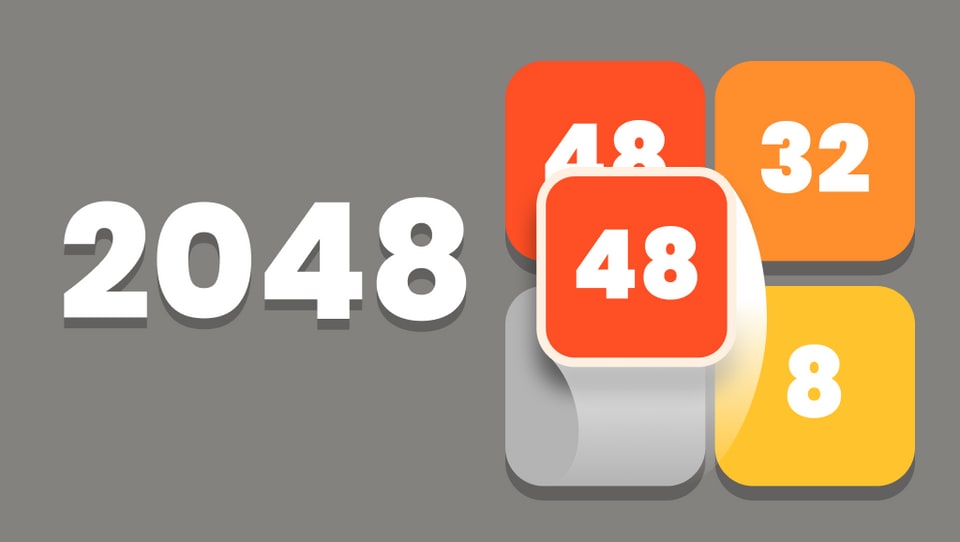
At first glance, 2048 seems almost too simple to be challenging. You move numbered tiles across a small grid, combine matching numbers, and try to create the famous 2048 tile. There are no complicated characters, huge maps, or long instructions. Yet after a few moves, the empty spaces begin disappearing, and every decision suddenly feels important.
That contrast is one of the biggest reasons 2048 remains so entertaining. The rules can be understood in seconds, but mastering the board requires patience, planning, and plenty of careful thinking.
Every Move Has a Consequence
The interesting part of 2048 is that players cannot simply focus on their next merge. A useful move should also leave enough room for future possibilities. Sliding tiles in one direction might create an excellent combination, but it can also place important numbers somewhere difficult to control.
The order in which tiles move makes each decision even more meaningful. When several tiles are lined up, their positions determine which combinations happen first. This means a player can sometimes create a powerful merge simply by understanding how the board will shift.
Empty Space Is a Valuable Resource
One of the easiest things to overlook in 2048 is the value of an empty square. Open spaces give players flexibility, allowing new tiles to appear without immediately blocking useful combinations. Once the board becomes crowded, however, even a single available space can feel extremely valuable.
This creates an unusual kind of pressure. Players are not only trying to build larger numbers; they are also trying to protect the space needed to continue playing. A move that looks unproductive may actually be smart if it keeps the board organized.
Why Losing Can Still Feel Rewarding
Another fascinating feature of 2048 is how much players can learn from a failed attempt. A crowded board often reveals exactly where a strategy went wrong. Maybe tiles were merged too quickly, a corner was abandoned, or too many directions were used without a clear plan.
Because each round can be restarted immediately, players can test a different approach without a complicated setup. The next attempt feels like a small experiment based on everything learned from the previous one.
The Challenge Beyond 2048
Reaching 2048 is the obvious goal, but it does not have to be the end of the challenge. Players who become comfortable with the standard target can continue aiming for larger tiles such as 4096 or even 8192.
That possibility gives the puzzle surprising longevity. What begins as a quick number game can turn into a personal challenge to improve consistency, protect valuable positions, and make smarter decisions.
Ultimately, 2048 succeeds because it makes simple rules feel surprisingly deep. Every swipe changes the board, every empty square matters, and one careless move can completely alter the direction of a run.